
As I write these words, I have no notes, no outlines, nothing but the chemistry of my brain mixing things up. That’s how I like to write. In writing terms, I am an unrepentant pantser. Hence the title of this blog.
First, some definitions.
- A Pantser is a writer who flies by the seat of their pants when they create, surprised by everything that comes.
- A Plotter is a writer who uses notes, outlines, etc., planning their work before sitting down to write.
- A Plantser is a writer who uses elements of both the above approaches.
For me, pantsing came without that name. I was in my early twenties, holed up in my attic room in New Haven, CT, where I was studying undergraduate literature and writing. But most of the books I loved weren’t found in what I was reading for classes, though some of those writers later became favorites too.
The books I loved I found in dusty used bookstores around town. In the 1950s, 60s, and 70s, Grove Press published a lot of what I thought of then as literary maniacs.
My favorite of these was William S. Burroughs. 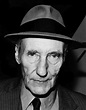 I picked up Naked Lunch from one of the piles in the bookstore, read it in my room, and found it stunning in that it annihilated all that I had learned about rules and structure and subject matter in writing a novel.
Thankfully I didn’t go out and shoot up with heroin in order to create my own pages, as Burroughs had in his own room in Tangier, and it’s not something I recommend to anyone out there. But his process, as far as I could see, was all about shutting off the conscious mind with its myriad constraints and taboos, to connect more with the subconscious.
In my late twenties, despite my tastes in books, I attended graduate school where I learned a pedagogy of writing from a book titled Writing Without Teachers by Peter Elbow. 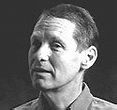
Elbow advocated freewriting, wherein you just picked up your pen and wrote nonstop, whatever came into your head. It was a method of trying to clear out the ruthless little editor that resides in so many folks’ conscious mind, toward instead being freer and more creative in one’s words and ideas.
I later learned, in my thirties, about the French Surrealists of the 1920s, who were big proponents and practitioners of automatic writing.
Robert Desnos 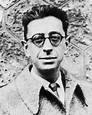 in particular was known for drifting off to sleep at will, then waking to transcribe what he had just dreamed. Again, these Surrealists blotted out conscious thought as much as possible, to entertain what the subconscious brought to the fore.
So I tried very hard in those years to write that way as well. It didn’t work out for me as quickly or effectively as it did for Burroughs, Elbow, Desnos, or others who used those or similar methods. But I did learn some things.
First off, I learned that writing for me is a process of discovery, and I derive my pleasure within that process. I’ve written papers for school where I needed notes and such and found that I derived no pleasure from it. I usually find such assignments a grind. But sitting down at my keyboard, staring into the absolute zero of the white page, and then having words flow into it like the waters of a warm spring, excites me to no end.
Second, I learned that my conscious mind tends to restrict such creativity by worrying over things like market, audience, grammar, etc. Those things are appropriate concerns AFTER the work is done. As I tell myself those times when my fingers aren’t flying over the keyboard when I wish to create, “Just Shut Up and Write!”
I don’t want to make it sound like I simply write things down and then come out in some immaculate condition, ready for publication. It doesn’t work that way. A lot of these drafts are terrible and I end up scrapping them.
I only get a first draft down this way. If I feel that the piece has some merit, then there are subsequent drafts, which are less automatic and more deliberate, where I comb through the manuscript and edit and revise to try to make it more palatable to whatever market I see this piece fitting in.
When I talk about markets on this blog, I refer to traditional publishing. Many people self-publish. More power to them. I wish them nothing but success. Many wonderful writers over the centuries have followed the same path. I’m just not one of them.
I believe very much in affirming people’s individual paths and processes. Whatever works for you in this sometimes-crazy writing business, work it. I’m interested in other writers’ processes, paths, and wisdom, which is as valid for them as mine is for me.
I’ve been writing since I was thirteen, 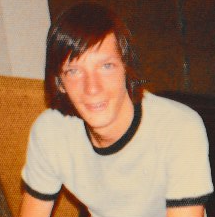 nearly fifty years ago. Back then, I wrote out of a need to express myself when I felt I wasn’t being heard by anyone. I had my first publication, a poem, when I was twenty-two. I had my first short story published when I was twenty-five. But my first novel didn’t appear until I was forty-nine, a long time later.
People have afforded me many opportunities over the years, some of which I took with good grace, some of which I didn’t. I’ve sent out my writing and had it accepted by journals that have pleased me to no end, while rejected by others just as pleasing.
I’ve learned a great deal through all this. In this blog I hope to offer useful ideas to the would-be or current pantser, and maybe to other writers who aren’t pantsers. And my simplest wish is to share that learning with others, as I have in the past with undergraduate students, people living with mental illness, and homeless people. After all, as writers, we’re all on some kind of journey. Let’s share what we can along the way.
 Michael Fontana
Leave a comment